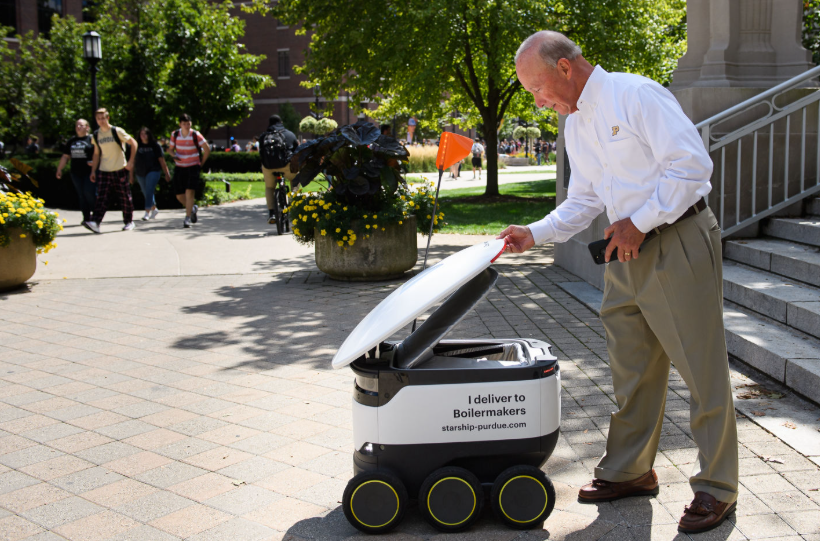
The emergence of autonomous delivery systems signifies a pivotal shift in logistics. Recent advancements in robotics and drone technology have streamlined operations, promising enhanced efficiency and reduced costs. As businesses respond to escalating consumer demands for swift and accessible service, the adoption of these systems accelerates. Yet, the path forward is fraught with challenges, including regulatory obstacles and public apprehension. How these factors will shape the future of delivery automation remains to be seen.
Advancements in Autonomous Delivery Technology
Recent advancements in autonomous delivery technology have significantly transformed the logistics landscape.
Robotic navigation systems now enable vehicles and drones to seamlessly traverse complex environments, enhancing operational efficiency.
Moreover, improved drone efficiency allows for quicker, more reliable deliveries, catering to consumer demand for speed and accessibility.
These innovations exemplify a shift towards greater autonomy, reflecting a growing desire for freedom in delivery solutions.
See also: The Rise of AI-Powered Healthcare Solutions
Benefits of Autonomous Delivery Systems
As businesses seek to optimize their operations, the benefits of autonomous delivery systems become increasingly evident.
These innovative solutions offer significant cost savings by reducing labor expenses and minimizing human error. Additionally, they promote improved efficiency, allowing for faster and more reliable deliveries.
Challenges Facing the Industry
While the advantages of autonomous delivery systems are clear, the industry faces a range of challenges that must be addressed to realize their full potential.
Regulatory hurdles hinder deployment, as lawmakers grapple with safety and liability concerns.
Additionally, consumer acceptance remains uncertain, with many wary of technology’s reliability.
Overcoming these barriers is crucial for the successful integration of autonomous delivery into everyday life.
The Future of Delivery Automation
How might the landscape of delivery services evolve with the continued advancement of automation technology?
The future promises an integration of robotic couriers and drone logistics, transforming traditional paradigms. Convenience and efficiency will reign, enabling rapid, cost-effective deliveries.
As these technologies mature, businesses may embrace innovative models, fostering consumer freedom while addressing urban congestion and environmental sustainability, ultimately reshaping commerce on a global scale.
Conclusion
In conclusion, the rise of autonomous delivery systems signifies a pivotal shift in logistics, with projections indicating that by 2025, the global market for delivery drones alone could exceed $1.5 billion. This transformation not only promises enhanced efficiency but also redefines consumer interactions with delivery services. However, to fully realize this potential, the industry must navigate regulatory landscapes and public perceptions, ensuring that the future of delivery automation is both accepted and embraced by society.