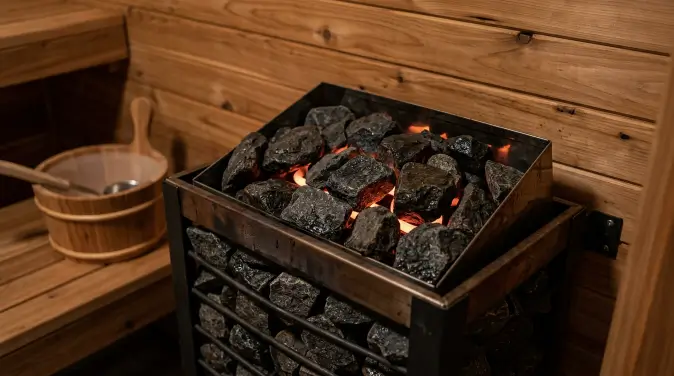
A home sauna’s base has to do two jobs at once: protect the floor around the heater to the manufacturer’s clearance specification, and keep the whole structure level and dry for years. On a budget, the three realistic options are a poured or paver concrete pad, a framed deck or joist platform, and a compacted gravel bed, and each one changes how much extra floor protection the heater area needs and how the electrical run reaches the unit.
Concrete Pad: The Most Heater-Friendly Option
A poured concrete pad, or a paver pad set on compacted base material, gives a flat, non-combustible surface directly under and around the heater, which matters because most heater manuals specify a minimum clearance from any combustible floor covering near the guard rail. It also handles the water that inevitably splashes near a traditional heater’s rock bed without warping or rotting, unlike a wood platform. The tradeoff is upfront cost and lead time, since a proper pad needs excavation, a gravel base layer, and either a concrete pour or paver setting, which takes longer than either alternative below.
Deck or Joist Platform: Faster, But Needs a Heat-Safe Zone
A framed deck or elevated joist platform goes up faster than concrete and suits a barrel or cabin sauna sitting above grade, but the area directly under and around the heater typically needs a non-combustible pad, tile, or metal shield laid over the decking, since bare wood decking under a heater’s guard clearance is not what most manufacturers spec. Comparing heater options against shop the current options before finalizing deck framing helps confirm the exact clearance and floor-protection numbers for a specific unit, since requirements vary by kW rating and manufacturer. Drainage also needs a plan, since a solid deck surface holds standing water longer than gravel unless it is sloped or gapped.
Compacted Gravel: Cheapest, With the Most Site Work
A bed of compacted gravel, usually crushed stone over a leveled and tamped base, costs the least in materials and drains well, which helps in a wet climate. It is a poor direct surface under the heater itself, though, so a gravel base almost always needs a paver or small concrete footing placed specifically under the heater’s footprint, plus level sauna floor framing above the gravel to keep the whole structure stable. Gravel also settles over the first year or two, so a base that looked perfectly level at installation can need a re-check and shim before a second winter.
See also; The LL-37 File: Somebody’s Selling You a Confession Peptide
How Heater Clearance Requirements Change the Decision
Every heater has a manufacturer-specified clearance from combustible material on the floor, walls, and ceiling, and that number is not the same across kW ratings or brands, so it is worth confirming before the base is finished, not after. A base plan that ignores this can mean tearing out finished flooring later to add a required non-combustible pad under the guard rail, which costs more than planning for it from the start. Budget buyers who assume any flat surface will do often end up spending more fixing a floor-clearance gap than they would have spent choosing the right base up front.
Why a Stable Base Supports Consistent Use
The heat exposure patterns studied in the sauna research literature, including a 2018 Mayo Clinic Proceedings review of cardiovascular and other health benefits and a related systematic review of regular dry sauna bathing, describe associations tied to sessions taken consistently over months and years, not a single visit. A base that settles, drains poorly, or forces a repair six months in is the kind of friction that quietly ends a regular habit, which is a practical reason to spend the extra effort getting the foundation right the first time rather than treating it as an afterthought once the heater itself is picked out.
Leveling and Drainage: The Two Details Every Base Shares
Regardless of which base a buyer picks, the structure above it needs to sit dead level, since even a slight lean over a few feet of footprint stresses door seals and can leave water pooling on one side of the floor instead of draining evenly. A gentle slope away from the sauna, or a French drain along the low side of a pad, keeps runoff from collecting against the structure’s base, which matters most in a climate with real rain or snowmelt. Checking level again about a month after installation, once any fresh gravel or paver base has had time to settle slightly under weight, catches small shifts before they become a bigger leveling job later.
A Simple Way to Decide on a Tight Timeline
For a buyer who needs the sauna running within a few weeks, a paver pad on a compacted gravel base is usually the fastest heater-safe option, since it skips the concrete cure time a poured pad needs while still giving a flat, non-combustible surface under the unit. For a buyer with more lead time and a slightly larger budget, a poured pad or a properly protected deck platform tends to need less maintenance over the following several years. Either way, confirming the specific heater’s clearance and floor-protection numbers before the base is finished, rather than assuming a generic answer applies, is the one step that prevents a costly redo.
Frequently Asked Questions
Does a sauna heater need special floor protection?
Most manufacturers specify a minimum clearance from combustible flooring near the heater guard, which often means a non-combustible pad, tile, or metal shield directly under and around the unit regardless of what the rest of the sauna floor is made of.
Is gravel a good base for a home sauna?
Gravel drains well and costs less than concrete, but it usually needs a paver or small footing placed under the heater itself, plus a leveled platform above it, since loose gravel alone is not a stable or heater-safe surface on its own.
Can a sauna sit directly on a wood deck?
Generally yes for the structure itself, but the area under and around the heater typically needs added non-combustible protection over the decking, since bare wood at the heater’s minimum clearance distance does not meet most manufacturer specs.
How much does a concrete pad for a sauna typically cost compared to gravel?
A poured or paver concrete pad usually costs more upfront than a compacted gravel bed because of the excavation, base material, and pour or paver-setting labor involved, though it needs less follow-up leveling over time than gravel does.
References
- Clinical Effects of Regular Dry Sauna Bathing: A Systematic Review, Evidence-Based Complementary and Alternative Medicine, 2018
- Does the Combination of Finnish Sauna Bathing and Other Lifestyle Factors Confer Additional Health Benefits? A Review of the Evidence, Mayo Clinic Proceedings, 2023
- Cardiovascular and Other Health Benefits of Sauna Bathing: A Review of the Evidence, Mayo Clinic Proceedings, 2018
By Renee Castellano