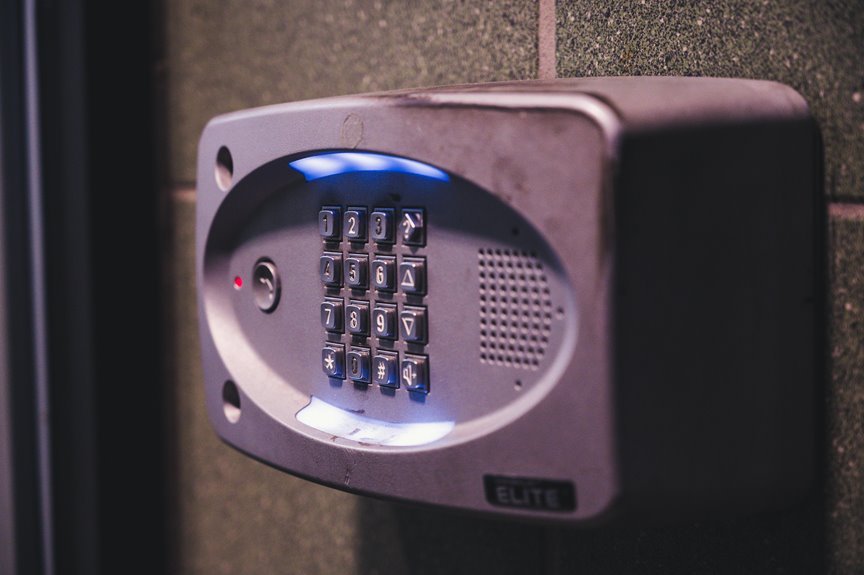
Quantum Access Synchronization Panel—6108003625, 8772027974, 6182062806, 8177615593, 2029756900—offers coordinated timing, calibration, and interface control across diverse quantum nodes. It enables deterministic correlations and reduced error rates by harmonizing state preparation, stabilization, and readout. The solution emphasizes secure, interoperable configurations and robust monitoring with failover strategies. It aligns governance and regulatory needs while supporting lab to enterprise deployments. Practical implications await further specification, inviting evaluation of integration points and operational impacts.
What Is Quantum Access Synchronization and Why It Matters?
Quantum Access Synchronization refers to the coordinated timing and alignment of quantum states across disparate systems to enable reliable, high-fidelity information transfer and computation. It establishes deterministic state correlations, reducing error rates and enhancing scalability. The concept underpins Quantum security and enables robust communication. Synchronization architectures provide layered timing controls, calibration protocols, and cross-system interfaces essential for cohesive quantum networks and practical deployment.
How the 6108003625, 8772027974, 6182062806, 8177615593, 2029756900 Configurations Work
The configurations represented by the sequences 6108003625, 8772027974, 6182062806, 8177615593, and 2029756900 establish a specific set of timing, calibration, and interface parameters that coordinate state preparation, stabilization, and readout across participating quantum nodes. They enable synchronized control loops, modular interoperability, and robust measurement pipelines, ensuring stability amid unrelated topic fluctuations and off topic noise while preserving system freedom.
Real-World Use Cases: From Labs to Enterprise Networks
Industrial and research environments increasingly apply synchronized quantum control concepts to practical workflows. Real-world deployments span laboratory experiments to enterprise networks, where synchronized access enables tighter collaboration and improved reliability. Implementations emphasize secure protocols and robust interfaces, ensuring interoperability across devices and vendors. Attention to failure modes, monitoring, and failover strategies supports continuous operation while maintaining data integrity and auditable decision paths.
How to Evaluate a Quantum Access Solution for Your Environment
Evaluating a quantum access solution requires a structured approach that aligns technical capabilities with organizational needs. Decision-makers should map threat models to feature sets, assess integration with existing identity frameworks, and quantify performance, reliability, and scalability.
Privacy considerations and regulatory compliance must be evaluated early, ensuring data handling aligns with governance policies, risk tolerance, and industry-specific mandates across the environment.
Frequently Asked Questions
What Security Standards Govern Quantum Access Synchronization Protocols?
Security standards for quantum access synchronization protocols emphasize cryptographic agility, conformity to data sovereignty requirements, and rigorous key management. They reference evolving post-quantum cryptography, secure protocols, interoperability, auditability, and risk-based governance suitable for freedom-minded implementations.
How Is Latency Measured in Synchronized Quantum Access Panels?
Latency measurement in synchronized quantum access panels is quantified via end-to-end timing and jitter analysis, aligned with established security standards, ensuring deterministic performance while preserving interoperability and user autonomy in secure environments.
Can Panels Operate With Legacy Network Devices Simultaneously?
The panels can operate with legacy network devices concurrently. They emphasize legacy compatibility and device interoperability, enabling seamless coexistence while preserving performance. The design prioritizes flexibility, reliability, and user autonomy within structured, clear operational boundaries.
What Are Common Interoperability Issues Across Models 6108003625 to 2029756900?
Interoperability issues arise across models due to protocol mismatches and intermittent compatibility gaps; consequently, interoperability bottlenecks impede seamless cross-model integration, prompting engineers to implement bridging solutions, rigorous testing, and standardized interfaces to preserve functional flexibility.
How Does Failure Recovery Impact Synchronized Access Timelines?
Failure recovery can delay synchronized timelines, as recovery procedures introduce latency and require coordination across systems. It tests legacy compatibility and model interoperability, potentially tightening schedules; robust strategies preserve synchronized timelines while accommodating heterogeneity and continuity across models.
Conclusion
Quantum Access Synchronization Panels coordinate timing, calibration, and control across diverse quantum nodes, enabling deterministic correlations and reduced error rates in multi-vendor environments. Their interoperable configurations, robust monitoring, and failover strategies support secure, scalable quantum networks from labs to enterprises. By unifying state preparation, stabilization, and readout, they enhance reliability and performance. Are organizations ready to embrace cohesive, high-fidelity quantum operation across complex architectures to unlock transformative capabilities?